Jocando
Redesigned time tracking for an HR application to eliminate tracking friction
- Role
- UX researcher and designer
- Client
- Jacando
- Timeline
- 2 weeks
- Tools
- Figma, Miro
The paradox
Time tracking is supposed to bring clarity.
In reality, it often creates resistance.
When I explored this space, I noticed a quiet but persistent behaviour:
people avoided tracking their time, even when they knew it would help them.
This wasn’t a feature problem.
It was a human one.
The Challenge
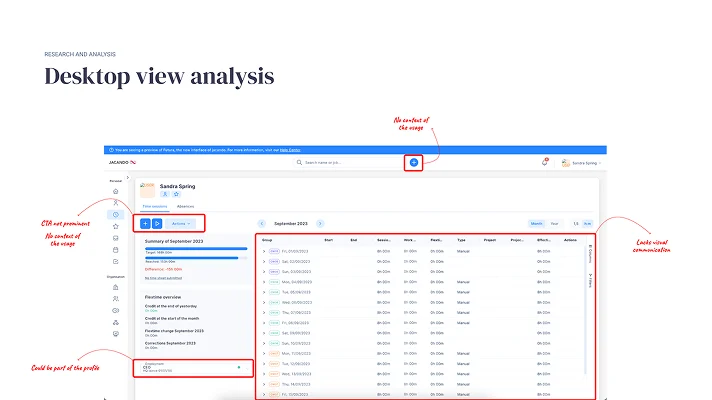
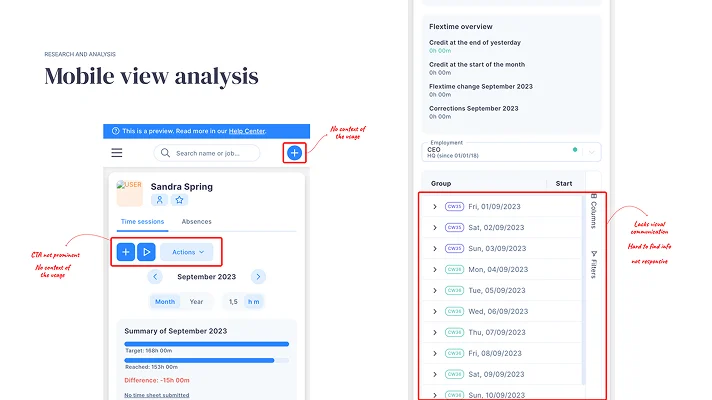
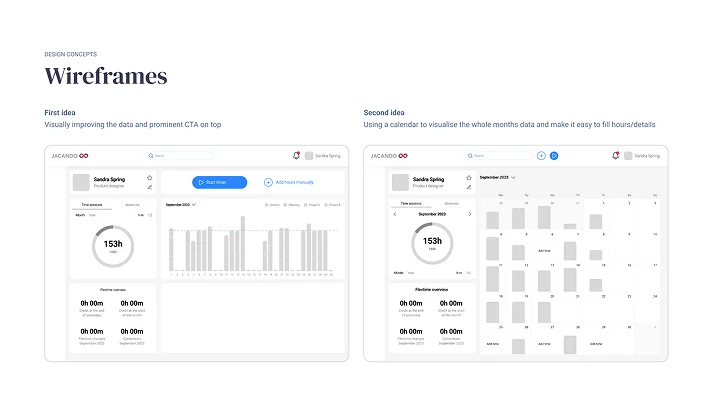
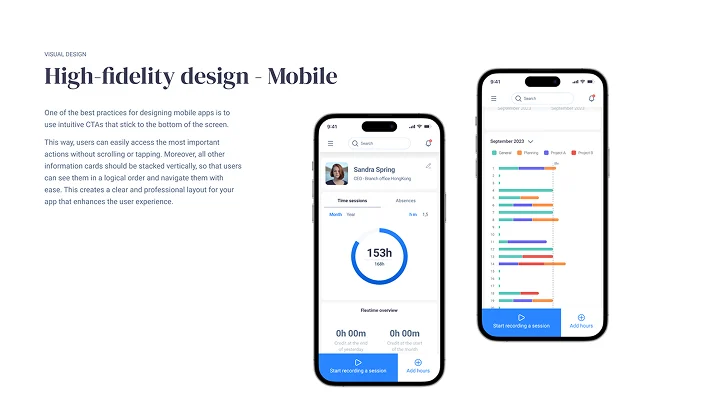
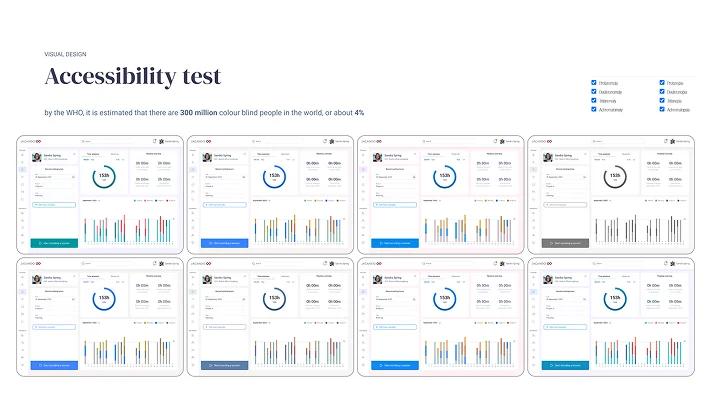
Most time-tracking tools are built with logic, not empathy. It was the same as seen above, complicated layouts, unclear CTAs.
The company assume users will:
Remember to track consistently
Be honest about how they spend time
Stay disciplined over long periods
But reality looks different.
People forget.
They procrastinate.
They estimate instead of logging.
The result?
Time tracking becomes a chore users postpone… or abandon entirely.
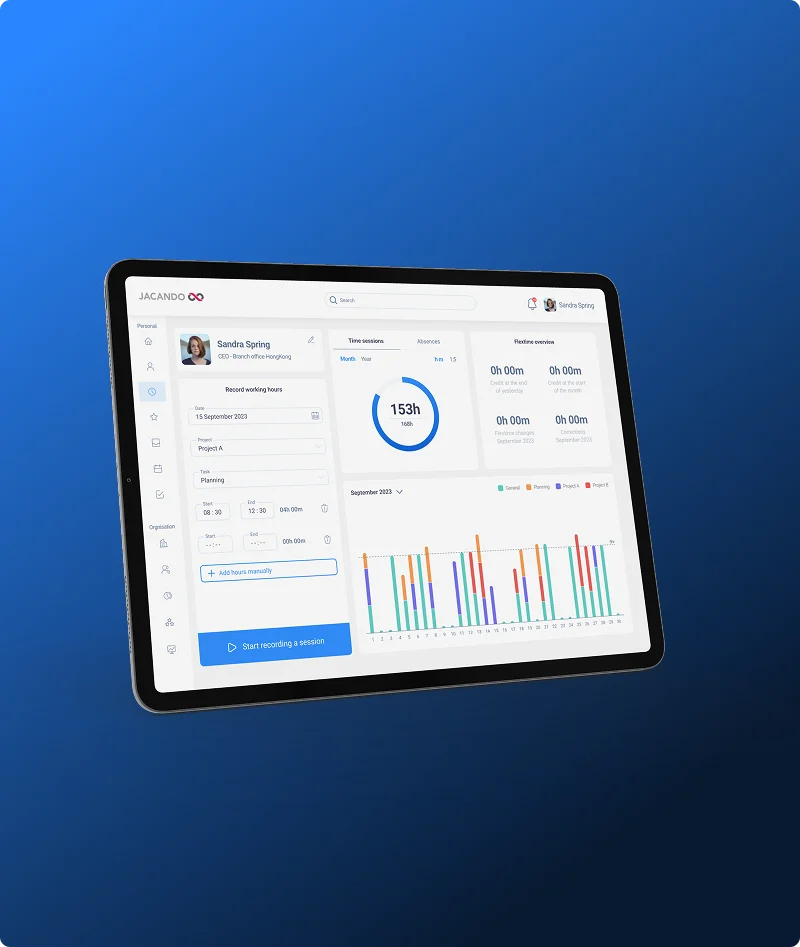
The Insights
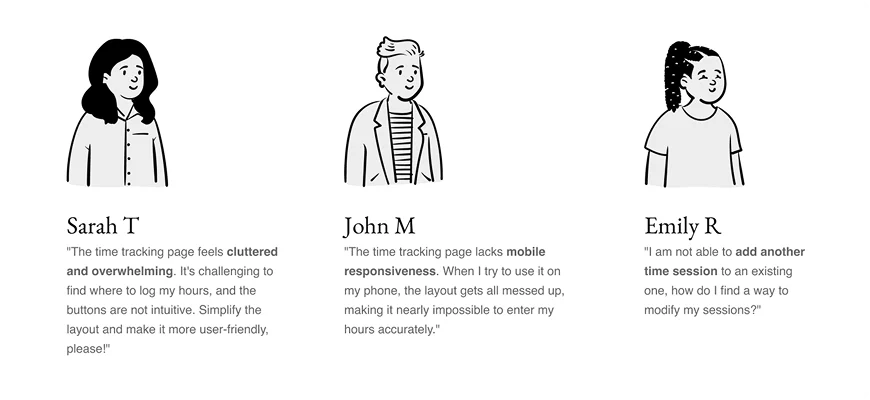
I identified a simple but powerful truth after user research:
👉 People don’t hate tracking time.
👉 They hate the effort and interruption it creates.
Tracking feels like stopping mid-thought to fill out a form.
It breaks flow. It demands attention at the wrong moment.
And anything that interrupts momentum is quickly avoided.
The Approach
We explored ways to make time tracking feel: Effortless & Passive
Embedded into natural workflows rather than asking users to do more, the system would need to do more for them.
Tracking should feel less like a task…and more like a byproduct.
And this simple idea came from iPhone's inbuilt app Screen time which automatically records time spent on different apps.
The Idea: Designing for Flow
The concept leaned toward low-interruption experiences:
- Minimising manual input
- Reducing decision-making moments
- Capturing time contextually instead of explicitly
The focus shifted from accuracy at all costs to ease and continuity. Because imperfect data that actually exists is more valuable than perfect data that never gets recorded.
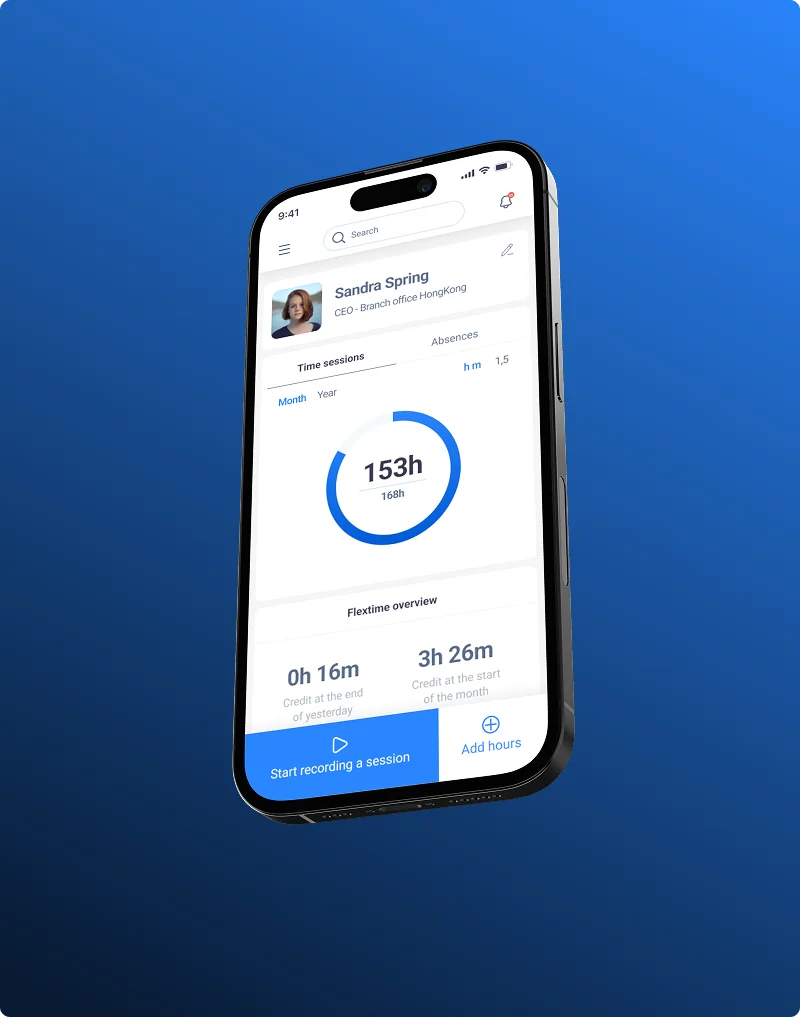
The Outcome
The result was a reimagined approach to time tracking:
- Less friction in starting and maintaining logs
- Reduced mental effort for users
- A system that supports flow instead of disrupting it
Tracking no longer felt like an obligation.
It became something that quietly happens in the background.